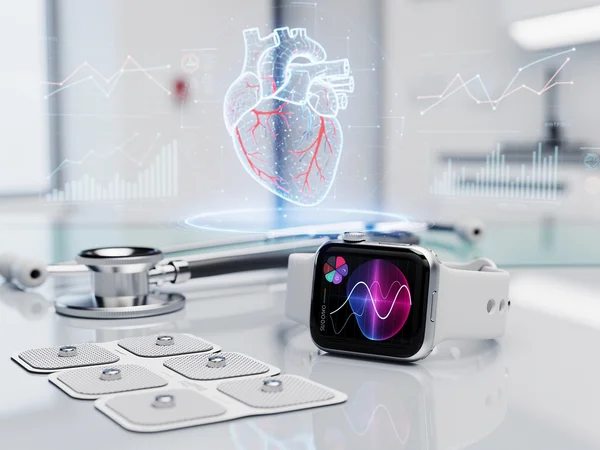
The intersection of consumer technology and preventive medicine has reached a pivotal moment as recent clinical studies demonstrate that smartwatch technology, particularly devices equipped with photoplethysmography sensors like the Apple Watch, can identify stroke risk factors years before traditional symptoms manifest. This development represents a fundamental shift in cardiovascular medicine, moving from reactive treatment to proactive intervention, potentially saving thousands of lives and billions in healthcare costs annually.
According to research highlighted by CNET , multiple peer-reviewed studies have validated the capability of wrist-worn devices to detect atrial fibrillation (AFib), an irregular heart rhythm that significantly increases stroke risk. The technology leverages optical sensors that measure blood flow through the skin, detecting subtle irregularities in heart rhythm that often go unnoticed by patients and may not be captured during brief clinical visits. This continuous monitoring capability transforms millions of consumer devices into potential life-saving medical instruments.
Advertisement
article-ad-01The clinical implications extend far beyond simple heart rate monitoring. AFib affects approximately 2.7 to 6.1 million Americans, according to the Centers for Disease Control and Prevention, yet many cases remain undiagnosed because the condition can be episodic and asymptomatic. Traditional diagnosis requires either symptoms prompting medical attention or incidental discovery during routine examinations. The Apple Heart Study, which enrolled over 400,000 participants, demonstrated that wearable technology could identify irregular heart rhythms with a positive predictive value of 84% when subsequently confirmed by ECG patch monitoring.
The Technology Behind Early Detection
Photoplethysmography (PPG) technology, the cornerstone of most smartwatch heart monitoring systems, operates by illuminating the skin with LED lights and measuring the light absorption variations caused by blood volume changes with each heartbeat. While this technology has existed for decades in clinical pulse oximeters, its miniaturization and integration into consumer devices represents a remarkable engineering achievement. The algorithms processing this data have become increasingly sophisticated, employing machine learning models trained on millions of heartbeat patterns to distinguish normal sinus rhythm from potentially dangerous arrhythmias.
The Apple Watch’s irregular rhythm notification feature, cleared by the FDA in 2018, exemplifies this technological evolution. The device periodically checks heart rhythm in the background and sends notifications if it detects signs of AFib over a series of readings. This passive monitoring approach means users don’t need to remember to take measurements or recognize symptoms—the device works continuously and automatically. The FDA clearance marked a watershed moment, representing regulatory acknowledgment that consumer technology had achieved clinical-grade accuracy for specific diagnostic purposes.
Clinical Validation and Real-World Performance
The Heartline Study, a collaboration between Johnson & Johnson and Apple announced in 2020, enrolled 150,000 participants aged 65 and older to evaluate whether the Apple Watch and associated app could improve health outcomes through early AFib detection and better adherence to anticoagulation therapy. While complete results are still being analyzed, interim findings suggest significant potential for reducing stroke incidence in high-risk populations. The study’s scale and rigorous methodology address earlier criticisms about the limited clinical evidence supporting consumer wearables in medical decision-making.
Beyond AFib detection, emerging research explores whether smartwatch data can predict stroke risk through additional biomarkers. Variations in heart rate variability, resting heart rate trends, and activity patterns may collectively indicate cardiovascular deterioration before acute events occur. Researchers at Stanford University and other institutions are developing algorithms that analyze these multiple data streams simultaneously, creating composite risk scores that could trigger earlier medical intervention. This multifactorial approach acknowledges that stroke risk results from complex interactions between multiple physiological systems.
Challenges in Clinical Integration
Despite promising technology, significant barriers impede widespread clinical adoption of smartwatch-derived health data. Many healthcare systems lack infrastructure to receive, process, and act upon the continuous data streams these devices generate. Electronic health record systems weren’t designed to incorporate patient-generated health data at this scale, and clinicians face legitimate concerns about alert fatigue and liability for missed notifications. The healthcare industry must develop new workflows and decision support tools that leverage wearable data without overwhelming providers or creating new sources of medical error.
The issue of false positives presents another substantial challenge. While the Apple Watch demonstrates high positive predictive value in controlled studies, real-world deployment across diverse populations with varying health conditions inevitably produces notifications that don’t represent true AFib. Each false positive potentially triggers unnecessary anxiety, additional testing, and healthcare costs. Balancing sensitivity and specificity remains an ongoing challenge, with manufacturers continuously refining algorithms to minimize false alarms while maintaining detection capability for genuine arrhythmias.
Economic and Access Considerations
The cost-effectiveness of smartwatch-based stroke prevention depends on multiple factors, including device adoption rates, follow-up care compliance, and the ultimate impact on stroke incidence. Stroke costs the United States an estimated $53 billion annually in healthcare expenses, lost productivity, and disability support. If wearable technology prevents even a small percentage of strokes through earlier AFib detection and treatment, the economic benefits could substantially outweigh implementation costs. However, these calculations assume equitable access to both devices and follow-up care, which current socioeconomic disparities make unlikely without policy intervention.
Device cost presents a significant barrier to universal adoption. While Apple Watch prices have decreased over successive generations, the devices still represent substantial investments for many Americans, particularly older adults at highest stroke risk who may have fixed incomes. Some insurance companies and Medicare Advantage plans have begun covering or subsidizing wearable devices for high-risk populations, recognizing the potential for cost savings through prevention. Expanding these programs could democratize access to potentially life-saving technology, but requires convincing payers that upfront device costs will generate sufficient downstream savings.
Regulatory Evolution and Future Directions
The FDA’s approach to regulating consumer health technology continues evolving as devices become more sophisticated and their medical applications expand. The agency has developed pathways for digital health technologies that balance innovation encouragement with patient safety protection. Apple’s irregular rhythm notification received De Novo classification, a pathway for novel low-to-moderate risk devices, establishing a regulatory precedent for similar technologies. As manufacturers add features like blood pressure monitoring, glucose sensing, and advanced cardiac measurements, regulatory frameworks must adapt to assess these capabilities’ clinical validity and safety implications.
Looking forward, the integration of artificial intelligence and expanded sensor capabilities promises even more sophisticated health monitoring. Researchers are exploring whether combinations of cardiac, respiratory, movement, and sleep data can predict not just AFib but broader cardiovascular events including heart attacks and strokes from multiple causes. The Apple Watch’s existing sensors capture far more physiological information than currently utilized for health monitoring, and future algorithm development may unlock additional predictive capabilities from this existing data. The challenge lies in validating these predictions through rigorous clinical trials before marketing them to consumers.
Patient Empowerment and Behavioral Change
Beyond detection capabilities, smartwatch technology’s impact on patient engagement and health behaviors deserves consideration. When individuals receive real-time feedback about their cardiovascular health, many become more motivated to adopt lifestyle changes that reduce stroke risk. Activity tracking, exercise prompts, and medication reminders integrated into these devices create a comprehensive health management ecosystem. This behavioral dimension may prove as important as the diagnostic capabilities themselves, as lifestyle modification remains fundamental to cardiovascular disease prevention regardless of technological sophistication.
The psychological impact of continuous health monitoring presents both opportunities and risks. Some users report increased health awareness and proactive healthcare engagement after receiving irregular rhythm notifications, even when follow-up testing reveals no serious condition. Others experience anxiety and hypervigilance about normal physiological variations, a phenomenon sometimes called “cyberchondria.” Healthcare providers must help patients interpret wearable data appropriately, distinguishing actionable findings from normal variations that don’t require intervention. This educational role becomes increasingly important as more patients arrive at appointments with extensive self-collected health data.
The Path Forward for Preventive Cardiology
The integration of consumer wearables into stroke prevention strategies represents a broader transformation in preventive medicine, shifting from periodic clinical assessments to continuous remote monitoring. This transition requires changes not just in technology but in healthcare delivery models, reimbursement structures, and clinical training. Cardiologists and primary care providers need education about interpreting wearable data, understanding its limitations, and incorporating it into treatment decisions. Medical schools and residency programs are beginning to address these topics, but widespread clinical competency will take years to develop.
As evidence accumulates regarding smartwatch technology’s effectiveness in reducing stroke incidence, professional medical societies will likely develop clinical guidelines for its use. These guidelines must address questions about which patients should use monitoring devices, how frequently data should be reviewed, what thresholds should trigger clinical action, and how to manage patients who receive irregular rhythm notifications. Standardized protocols will help ensure consistent, evidence-based care while reducing unnecessary testing and treatment. The development of such guidelines requires collaboration between technologists, clinicians, regulators, and patient advocates to balance innovation with safety and effectiveness.
The convergence of consumer technology and clinical medicine exemplified by smartwatch-based stroke risk detection offers remarkable potential to prevent devastating health events through early intervention. Realizing this potential requires addressing technical, clinical, economic, and social challenges while maintaining focus on improving patient outcomes. As these devices become more capable and widespread, their role in preventive healthcare will likely expand, fundamentally changing how we approach cardiovascular disease management and potentially serving as a model for technology-enabled prevention of other chronic conditions.

LEAVE A REPLY
Your email address will not be published